Before Attendance
Agree the rooms, equipment, timing, access history and practical limits of the inspection.
A sensitive-event TSCM inspection is carried out shortly before a high-value confidential meeting or negotiation. It is designed for organisations protecting important conversations — whether or not there is any specific suspicion that surveillance is already present.
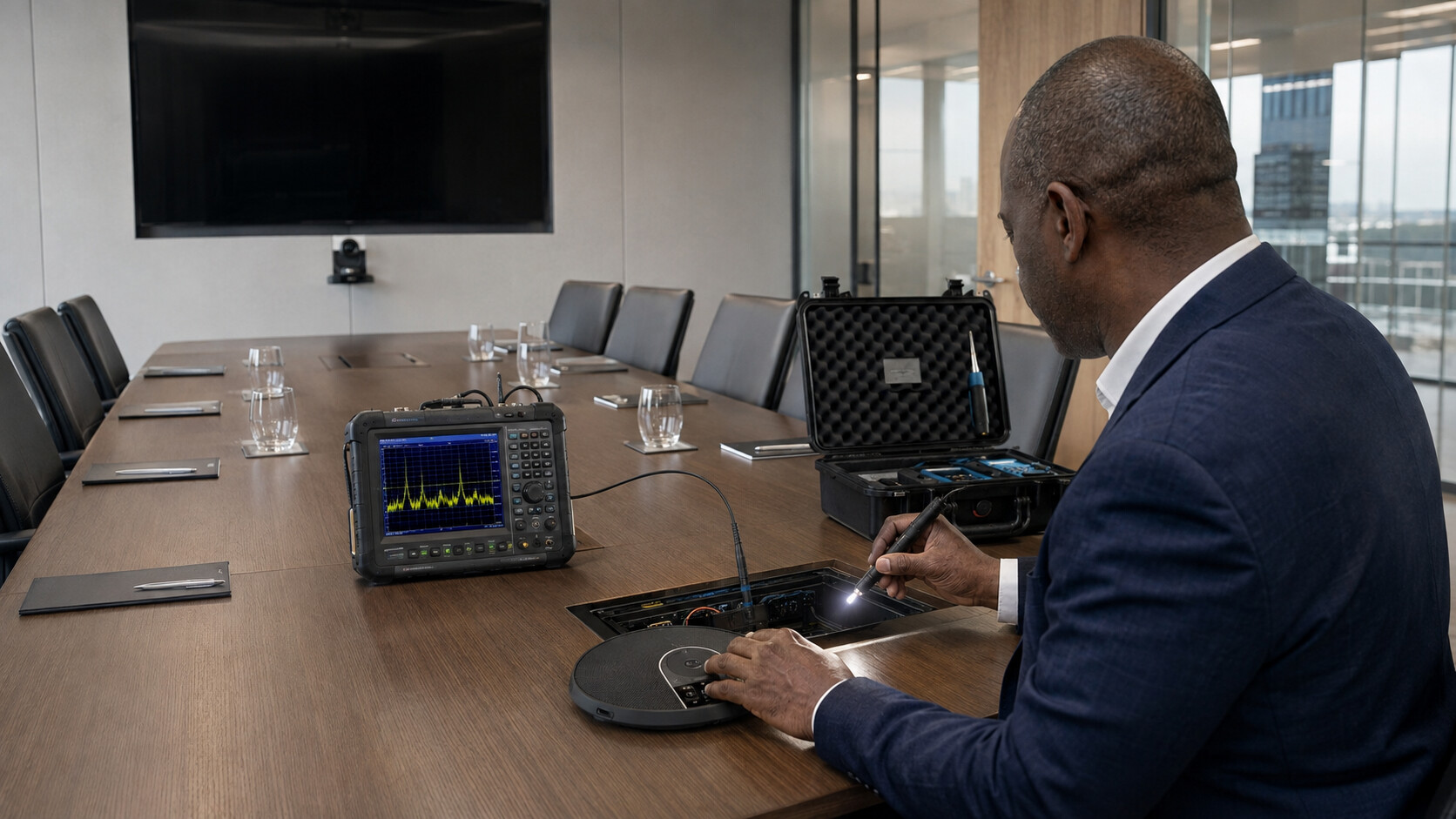
Sensitive-event TSCM is intended for a defined period of heightened confidentiality. Typical uses include mergers and acquisitions, major tenders, litigation strategy, board discussions, product launches, restructuring, investment negotiations, important client negotiations, foreign delegations and other commercially sensitive meetings.
Agree the rooms, equipment, timing, access history and practical limits of the inspection.
Apply appropriate RF, physical and electronic methods and resolve unexplained anomalies.
Control access, record introduced items and avoid unsupervised changes before the meeting.
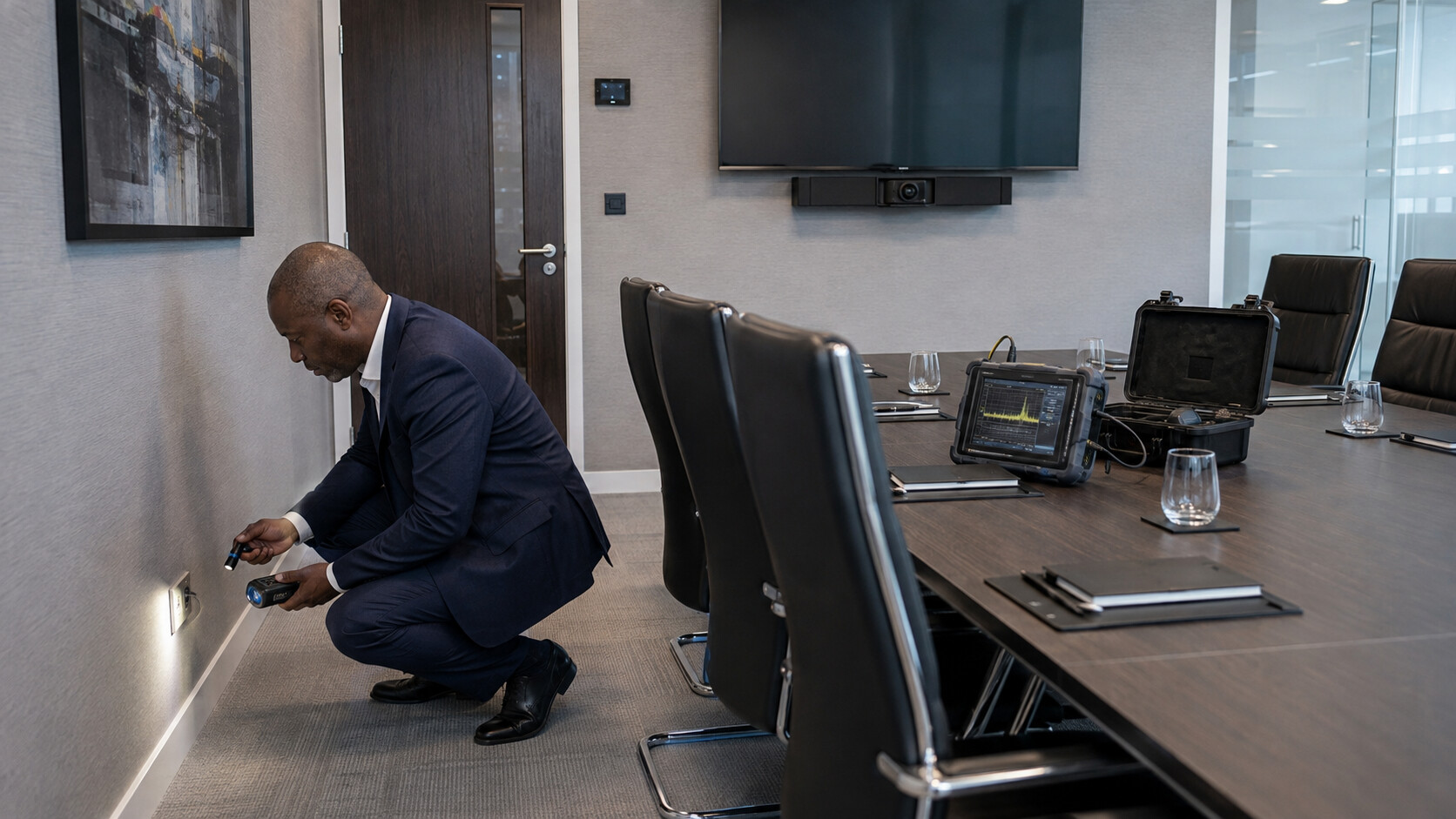
A room inspected on Monday is not automatically protected for a meeting on Friday. The value of a pre-meeting sweep depends on what changes, who gains access and whether equipment is introduced after the inspection.
Speech may be audible outside the room, structure-borne sound may travel through partitions, and intended wireless signals may extend farther than expected. For higher-risk meetings, a practical acoustic and RF privacy leakage assessment can complement the TSCM inspection.
Hotels, conference venues and serviced offices present different constraints from premises controlled by the client. The available inspection time, access to fixtures and infrastructure, neighbouring occupancy and venue equipment should be agreed realistically.
The client should understand what was inspected, what could not be accessed, whether anything required further investigation and what controls should remain in place until the meeting ends.
Organisations can use sensitive-event inspections as part of a wider Corporate TSCM & Technical Security Assurance programme. Once the normal RF and physical environment is understood, later visits can concentrate more efficiently on changes, anomalies and the specific event being protected.
A client does not necessarily need frequent monthly sweeps. A baseline assessment can be followed by scheduled reviews, change-triggered inspections and additional TSCM before an acquisition meeting, tender presentation, litigation conference, product announcement or other high-value event. This can form part of an ongoing Corporate TSCM & Technical Security Assurance programme.
Tell us the general location, type of meeting or event, rooms involved, timing and when the area can be controlled. There is no need to provide transaction names or other highly sensitive details at the initial enquiry stage.