01
Covert transmitting devices
Concealed microphones or cameras may use radio, cellular, Wi-Fi or other communications to move information away from the room.
A hidden radio microphone is only one possible route by which a confidential discussion can be compromised. Effective meeting-room security considers technology, acoustics, legitimate systems, people and what happens before and after the meeting.
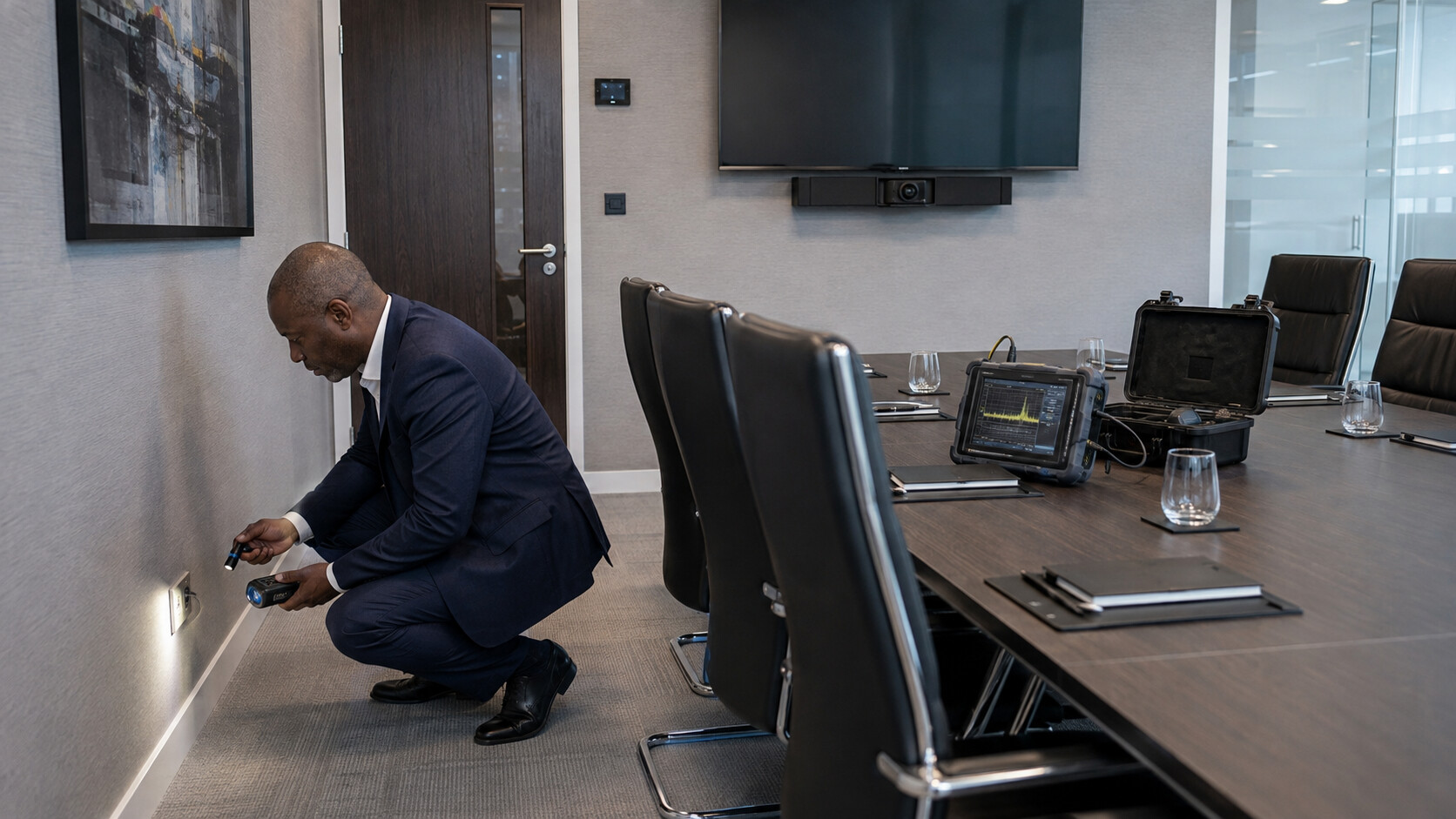
The relevant risks vary with the organisation and meeting. These examples are not evidence that any particular room is compromised; they are categories to consider when deciding how much protection a sensitive discussion requires.
Concealed microphones or cameras may use radio, cellular, Wi-Fi or other communications to move information away from the room.
A local recorder can capture a meeting without producing a continuous RF signal, which is why RF detection alone is not enough.
Conferencing systems, laptops, phones and smart devices already contain microphones, radios and network connections and need appropriate control.
Doors, glazing, lightweight partitions, ceilings and ventilation paths may allow confidential speech to remain intelligible outside the room.
Authorised Wi-Fi, Bluetooth and other RF systems can extend beyond the intended room or security boundary and should be understood in context.
Temporary equipment, gifts, chargers, contractors, cleaners or other access can change the room after it has been inspected.
Not every leak is technical. Poor document handling, conversations in adjoining areas and unnecessary distribution of sensitive information can defeat an otherwise secure room.
A proportionate boardroom security plan may combine TSCM, physical access control, management of devices brought into the room, acoustic privacy checks and awareness of authorised RF systems. The objective is not to create a supposedly perfect room; it is to understand and reduce credible routes by which information could leave.
Bug sweeping asks whether unexplained surveillance technology is present. A privacy assessment asks whether the room and its normal systems allow information to extend beyond the intended boundary. For important meetings, both questions can matter.
If the information matters, move from general boardroom guidance to a focused pre-meeting or privacy assessment.
Have the room professionally inspected before negotiations, board meetings or sensitive discussions.
Assess whether speech or authorised wireless signals extend beyond the intended private area.
Professional office and boardroom surveillance detection for confidential business environments.