01
Private information appears outside the room
Details from strategy, pricing, legal, personnel or negotiation discussions become known to people who were not expected to have them.
Information leaks, unexplained knowledge of private discussions or suspicious changes to equipment can justify investigation—but none proves that an office is bugged. This guide explains what deserves attention and what to do next.
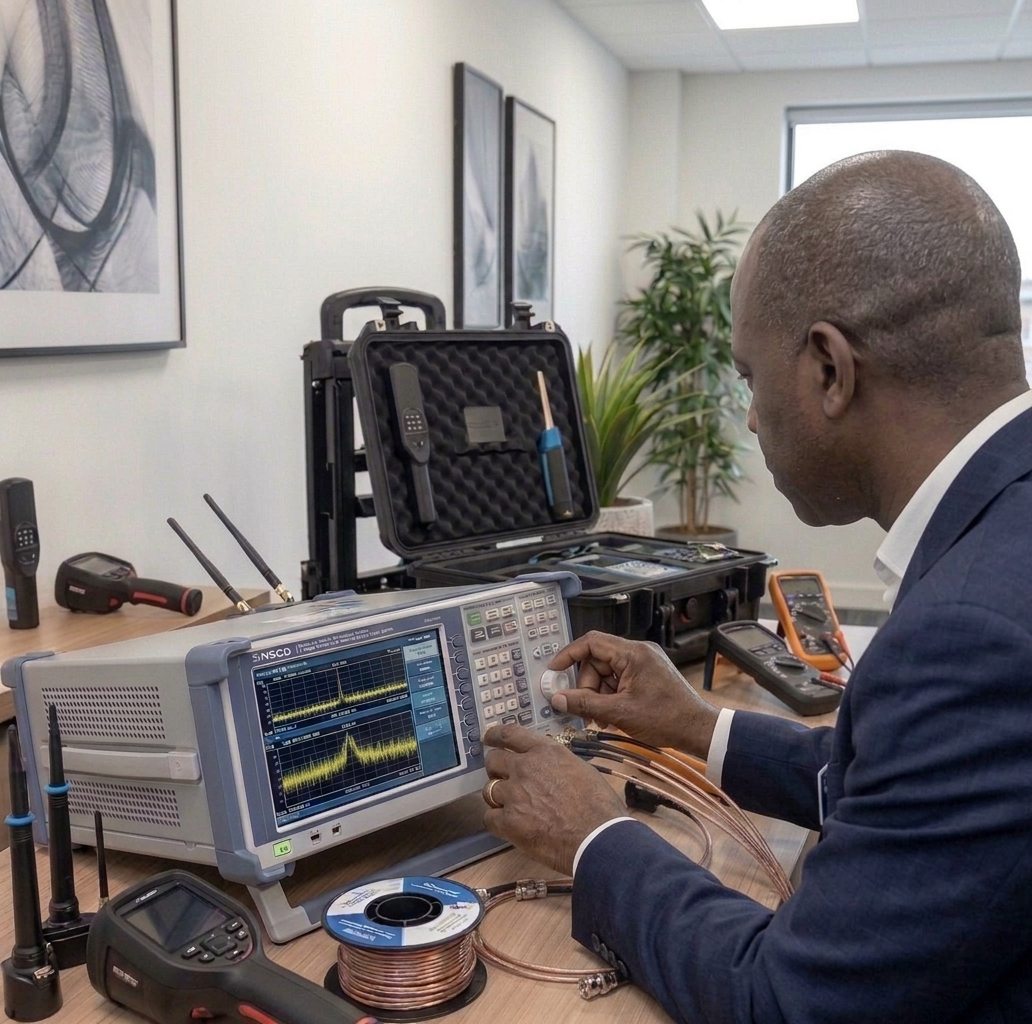
Most corporate enquiries begin with an information-security concern rather than the discovery of a device. A competitor may appear unusually well informed, details from a closed meeting may circulate unexpectedly, or an unfamiliar item or modification may be noticed in a sensitive area. These observations justify calm investigation, not an assumption that surveillance is present.
Details from strategy, pricing, legal, personnel or negotiation discussions become known to people who were not expected to have them.
New chargers, adapters, clocks, conferencing accessories, cabling or altered fittings appear in or near a sensitive room without a clear owner or purpose.
Contractors, visitors or equipment have had unsupervised access to a boardroom, executive office or meeting space before confidential activity.
Interference on a phone, battery drain, clicks on calls, Wi-Fi activity and unfamiliar radio signals all have many legitimate causes. Modern offices contain dense wireless environments, including access points, mobile phones, Bluetooth peripherals, conferencing systems, access control and building-management equipment.
A basic RF detector can indicate radio energy, but it cannot by itself establish that the source is a listening device. Professional TSCM investigates signals and physical anomalies in context.
Keep the concern on a need-to-know basis, avoid repeatedly handling or dismantling a suspicious object, and record what prompted the concern. If a sensitive meeting is imminent, consider moving the discussion or arranging a pre-meeting inspection rather than attempting an improvised search.
If there is a genuine business concern, move from signs and indicators to a professional local TSCM service.
Professional TSCM and bug sweeping for London offices, boardrooms and commercial premises.
Professional office bug sweeping and surveillance detection for confidential business environments.
Have a meeting room checked before sensitive negotiations or confidential discussions.