Home/Technical Library/Choosing a TSCM Company
Buyer Guide

How to Choose a Professional TSCM Company

Not all bug-sweeping services provide the same level of technical investigation. Before you book, ask who will actually conduct the sweep, what technical background they have, what methods they use and what happens if something suspicious is found.

Do not choose on price alone

Two companies may both advertise a “bug sweep” while delivering very different levels of investigation. Compare technical competence, methodology, time on site, reporting and follow-up capability—not just the headline price.

RFSignal knowledge
ElectronicsTechnical background
MethodsMore than one detector
ReportClear findings
What to Compare

Questions worth asking before you book

A credible TSCM provider should be comfortable answering detailed questions about the person attending, their technical competence, the inspection process and the limitations of the methods being used.

Ask the providerWhy it matters
Who will actually conduct my sweep?The person selling the service may not be the person performing the technical investigation. Ask about the operator who will attend.
What is their RF and electronics background?Modern surveillance can involve radio, digital communications, cellular, Wi-Fi, Bluetooth, power supplies, wiring and embedded electronics. Technical interpretation matters.
What TSCM training and practical experience do they have?Training is useful, but it should sit alongside practical technical judgement and experience of real RF/electronic environments.
Do you use spectrum analysis?A spectrum analyser can help characterise and investigate RF activity rather than simply indicating that energy is present.
How do you investigate intermittent or unusual signals?Some devices may transmit briefly, intermittently or use techniques that are not well served by a simple broadband detector.
How do you address devices that are not transmitting?Not every surveillance threat is an active RF transmitter. Physical inspection and complementary detection methods can be important.
What areas and systems are included?A room sweep, a full property inspection and a vehicle investigation are different scopes. Make sure you know what the quoted price actually covers.
What happens if something suspicious is found?Locating an anomaly may be only the first step. Ask whether the provider can investigate it technically or arrange appropriate follow-up.
Will I receive a report?A useful report should explain the scope, findings, anomalies, limitations and any recommended next steps.
How is confidentiality handled?TSCM enquiries can be highly sensitive. The provider should explain how your enquiry, attendance and findings are treated.
Qualifications & Experience

Look beyond certificates

There is no single certificate that, by itself, proves someone is competent to carry out every type of TSCM investigation. Training and professional qualifications can be useful indicators, but the operator also needs practical technical judgement.

RF Knowledge

Can the operator distinguish and investigate legitimate radio activity rather than treating every detected signal as suspicious?

Electronics Knowledge

Can they understand power, wiring, embedded devices, unusual electronics and the difference between expected and unexplained hardware?

Surveillance Knowledge

Do they understand how modern covert devices can communicate, record, remain dormant or blend into legitimate wireless infrastructure?

Practical Investigation

Can they move from an instrument reading to a reasoned conclusion, localisation, physical examination and documented finding?

A useful question to ask

“What is the technical background of the person who will actually attend my property?” A polished sales conversation is not a substitute for competent technical investigation.

Equipment & Methodology

Do not ask only “what equipment do you use?”

A better question is: “Why do you use it, what can it detect, and what can it miss?” No single instrument can provide a complete TSCM inspection.

RF Detector

Useful for indicating nearby RF energy, but it may also respond to ordinary mobile phones, Wi-Fi, Bluetooth and other legitimate emitters.

Spectrum Analyser

Provides frequency-domain visibility and supports more detailed investigation of signals, bandwidth, activity and anomalies.

NLJD

Can assist with locating semiconductor electronics, including some devices that are not actively transmitting RF.

Physical / Optical

Important because cameras, recorders, hardwired devices and concealed electronics may not present as an obvious RF signal.

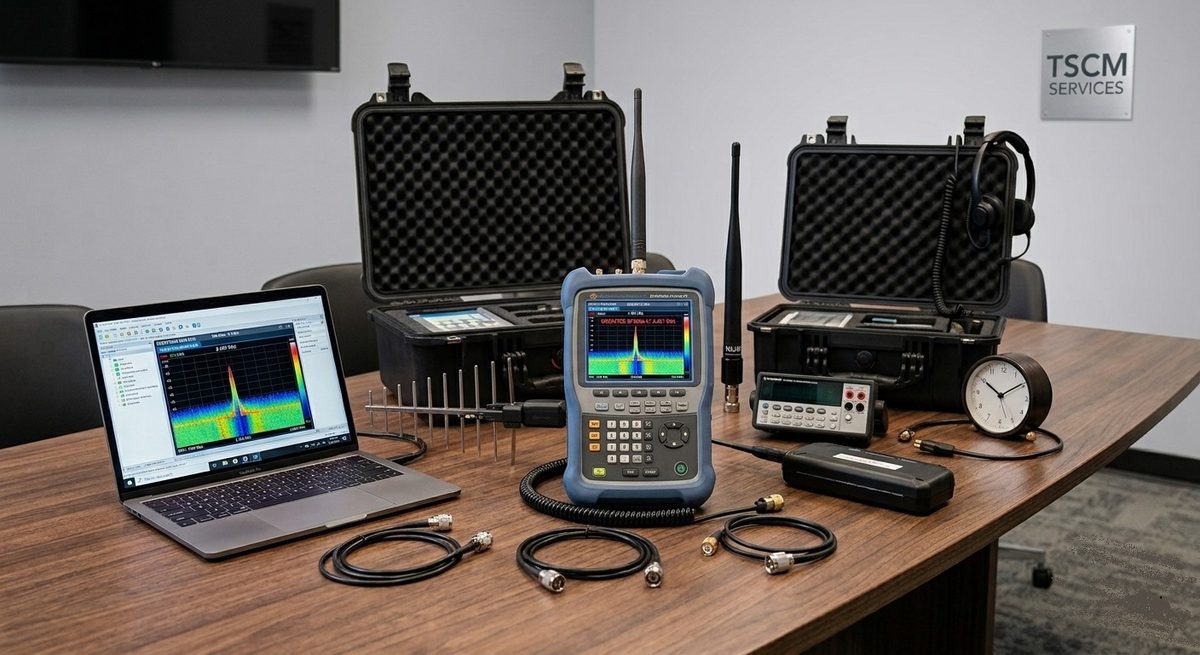
Professional TSCM and RF test equipment used for electronic surveillance detection
Professional equipment is valuable only when the operator understands what the measurements mean and how each method fits into a wider investigation.
Price vs Value

Should I choose the cheapest bug sweep?

Not necessarily. Expensive does not automatically mean better, but the lowest quotation may represent a very different scope of work. Compare the time allocated, technical competence of the operator, equipment and methodology, areas covered, reporting and whether further investigation is available.

A short walk-through with a broadband RF detector is not equivalent to a multi-stage technical inspection carried out by someone with RF and electronics expertise.

Compare what is included

Ask how long the provider expects to spend on site, which rooms/systems are included, what equipment and methods will be used, what reporting is provided and whether follow-up investigation is included in the quotation.

Follow-Up Capability

What happens if something suspicious is found?

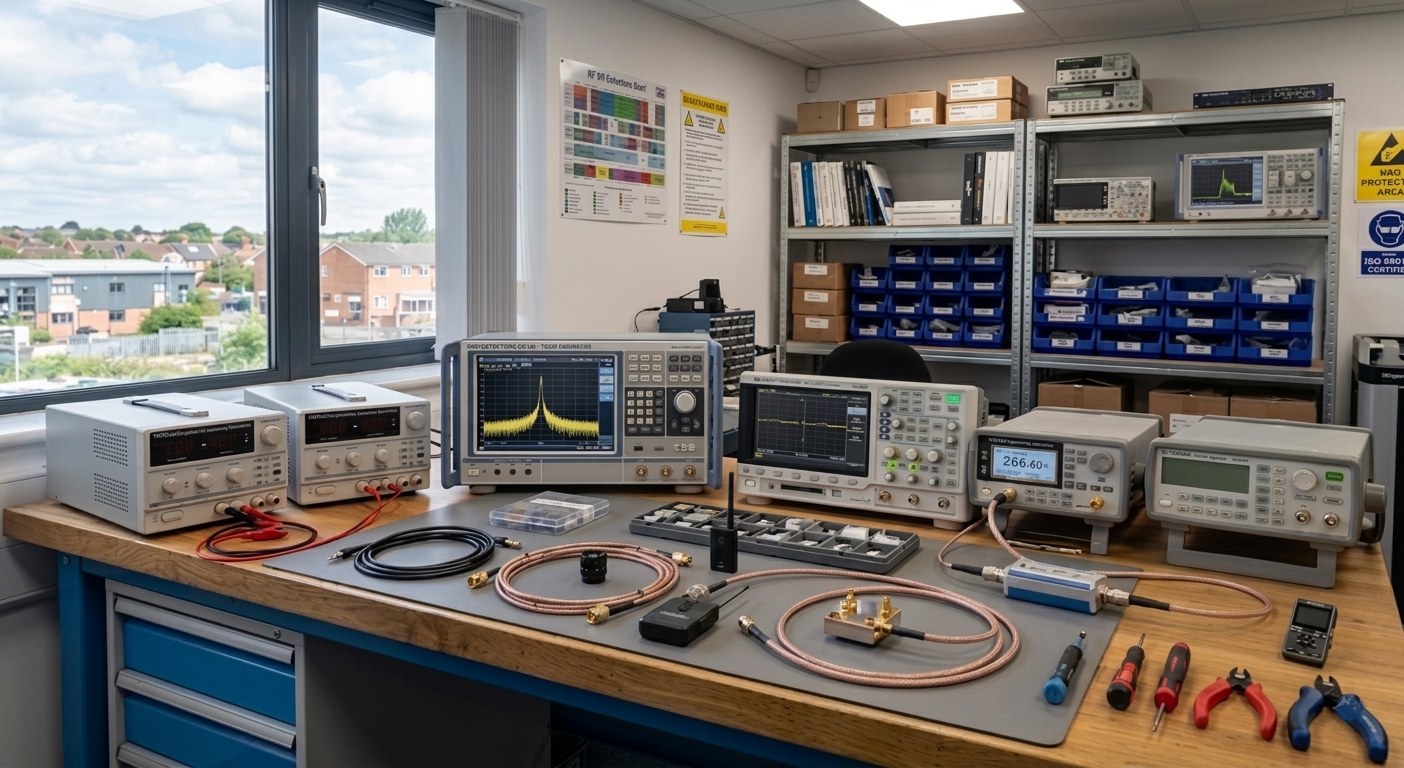
Finding an unusual device or unexplained RF signal may be the beginning of the investigation rather than the end. Where appropriate, suspicious equipment can be taken to our RF and electronics workshop for further technical examination and signal analysis.

That capability is particularly useful when an on-site inspection identifies something that cannot be conclusively assessed in the field.

Bug Detectors UK RF electronics workshop for further technical examination of suspicious equipment
Before You Book

12 questions to ask any TSCM company

You can use this list when comparing us with any other provider.

  1. Who will actually conduct my sweep?
  2. What is their RF and electronics background?
  3. What TSCM training and practical experience do they have?
  4. What equipment and detection methods will be used?
  5. Do you perform spectrum analysis?
  6. How do you address devices that are not transmitting?
  7. How long will the inspection take?
  8. Exactly what rooms, systems or areas are included?
  9. What happens if something suspicious is found?
  10. Will I receive written findings or a report?
  11. How do you protect my confidentiality?
  12. What exactly is included in the quoted price?
Compare Us Properly

Ask us these questions

We are happy to explain who will attend, our technical background, the methods we use, what is included in the inspection and the limitations of any TSCM survey before you book.

Vehicle TSCM

If a company offers vehicle tracker searches, ask how the underside is inspected

A battery-powered magnetic tracker may be concealed beneath a vehicle and may not be transmitting when the sweep takes place. If a provider describes its service as a comprehensive vehicle tracker inspection, ask whether the vehicle is safely raised on suitable professional lifting equipment or inspected over a suitable pit, and whether the full underside is actually included in the quoted scope.

A handheld RF detector cannot substitute for physical access to areas where a dormant device could be concealed.

WhatsApp Us